Meet the Team
With faster lives and even faster hard-hitting workouts, we’ve begun to idolize the weekend warrior. But rather than building your body, this creates a perception of health that is unsustainable and wears our bodies down.
As team SHIFT (Sustainable Health through Innovative Fitness Technologies) we aimed to create sustainable solutions for active living.
Using foundational body health as our guiding principle, we strive to use innovative solutions to empower people from all walks of life with the power to control their health.
We each took our own research in a different direction to define our own problems and solution scopes.
My focus fell on age and retirement.
Research

Why are age and exercise important?
With Canada's elderly population increasing and baby boomers coming to retirement, a surge in care-home demand is expected over the next few decades¹. However, some are focusing on at-home independence as a means of managing the demand. The result? A housing problem that depends heavily on the age, mobility, and fitness of Canada’s senior population.
(1) Gollom, M. (2017, May 4). “We’re so far behind”: Canada unprepared for housing needs of rising senior population | CBC News.
Participatory Interviews
The interviews focused on creating an open discussion about retirement and fitness. While not only sharing their thoughts and experiences with me, they were also able to relate to each other’s shared experiences. With many of them at different life stages and from different walks of life, it gave me a glimpse into what retirement can look like for different people.

Why do seniors exercise less?
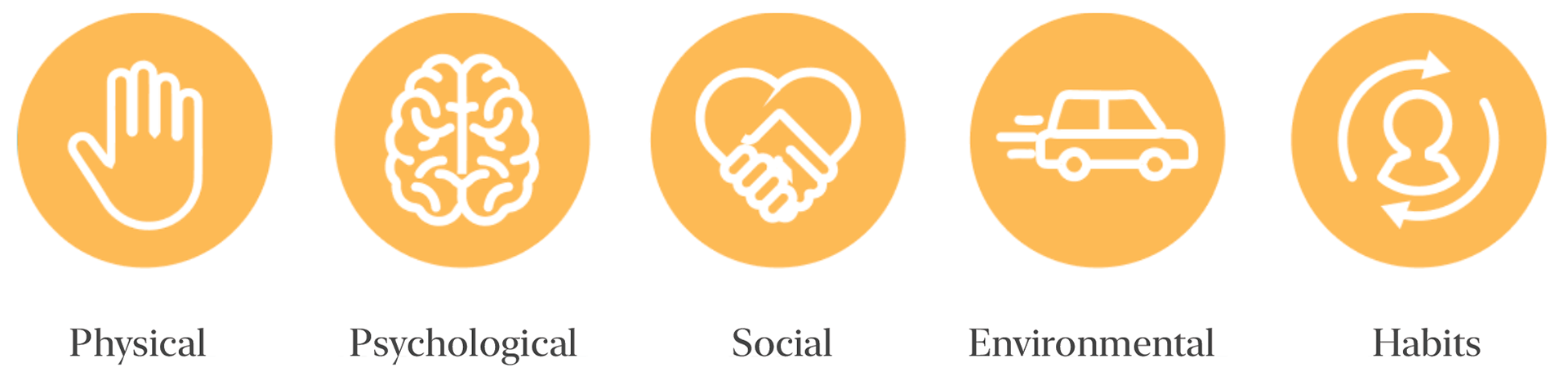
Firstly, it is important to note that it is not because of a lack of knowledge or understanding about its benefits. The decision of commitment is a dynamic process between many factors which can be categorized as follows:
Physical: Health, disease, age
Psychological: Enjoyment, self-efficacy, motivation, personal safety, fear
Social: Social support, companionship, family
Environmental: Weather
Behaviours & Habits: Previous experience
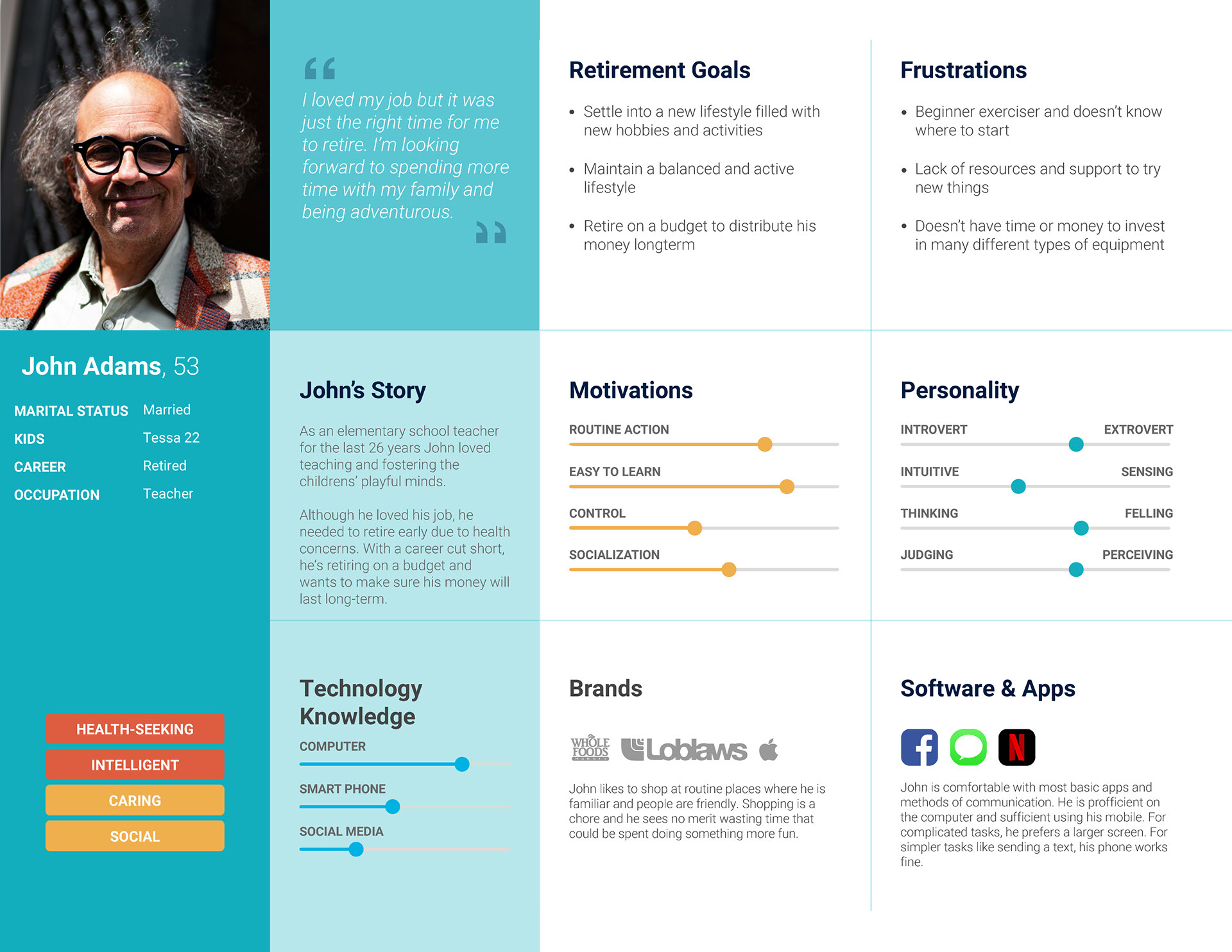
Meet John: A Modern-Day Retiree
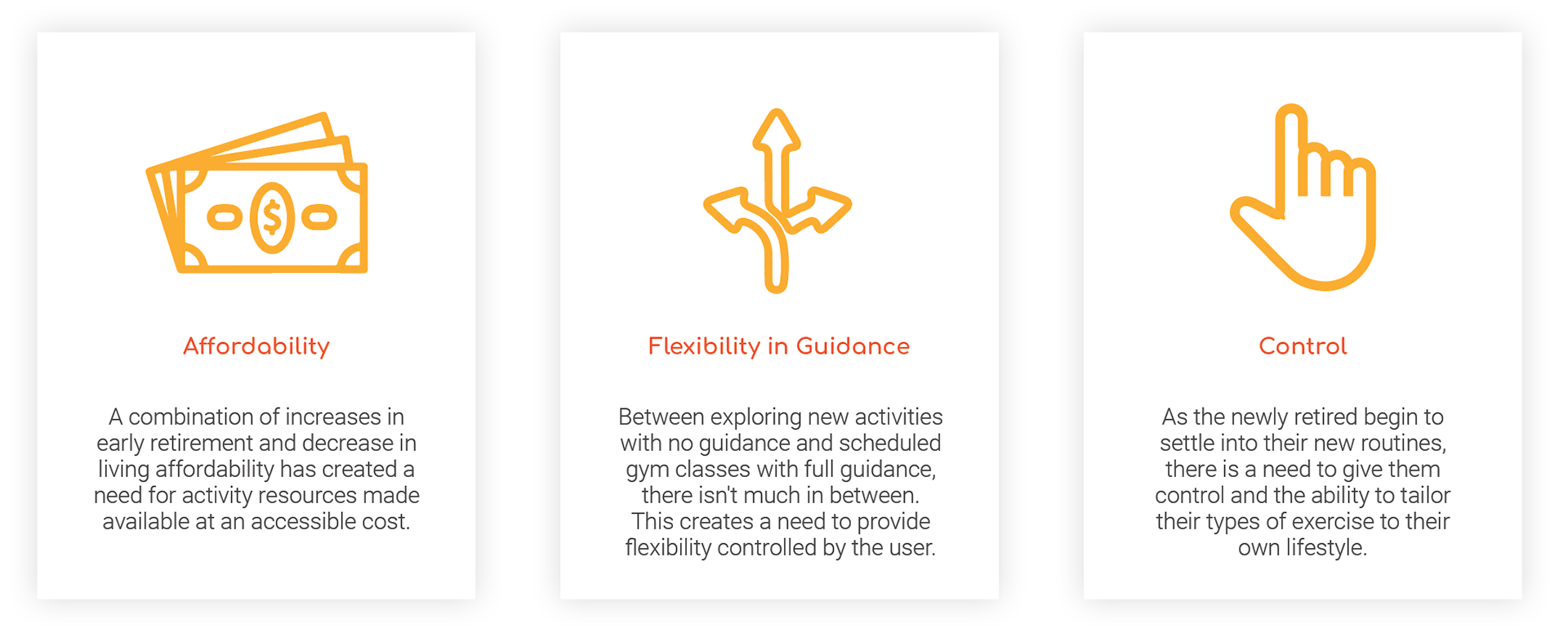
What are John's needs?
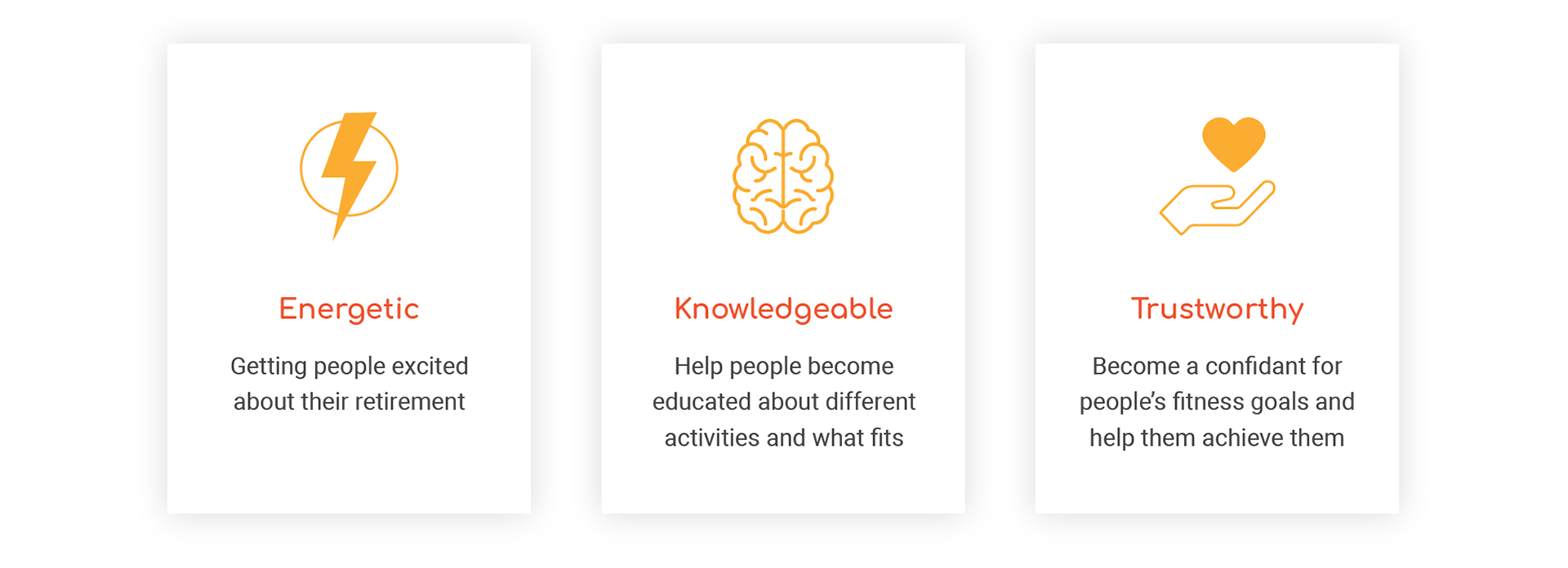
3 guiding principles to follow throughout my design process.
The Problem
So how can we help integrate active living into the routines of the newly retired?
"When we buy a product, we essentially 'hire' it to help us do a job. If it does the job well [...] we tend to hire that product again. And if it does a crummy job, we 'fire' it and look for an alternative."
-Clayton M. Christensen, Taddy Hall, Karen Dillon, and David S. Duncan
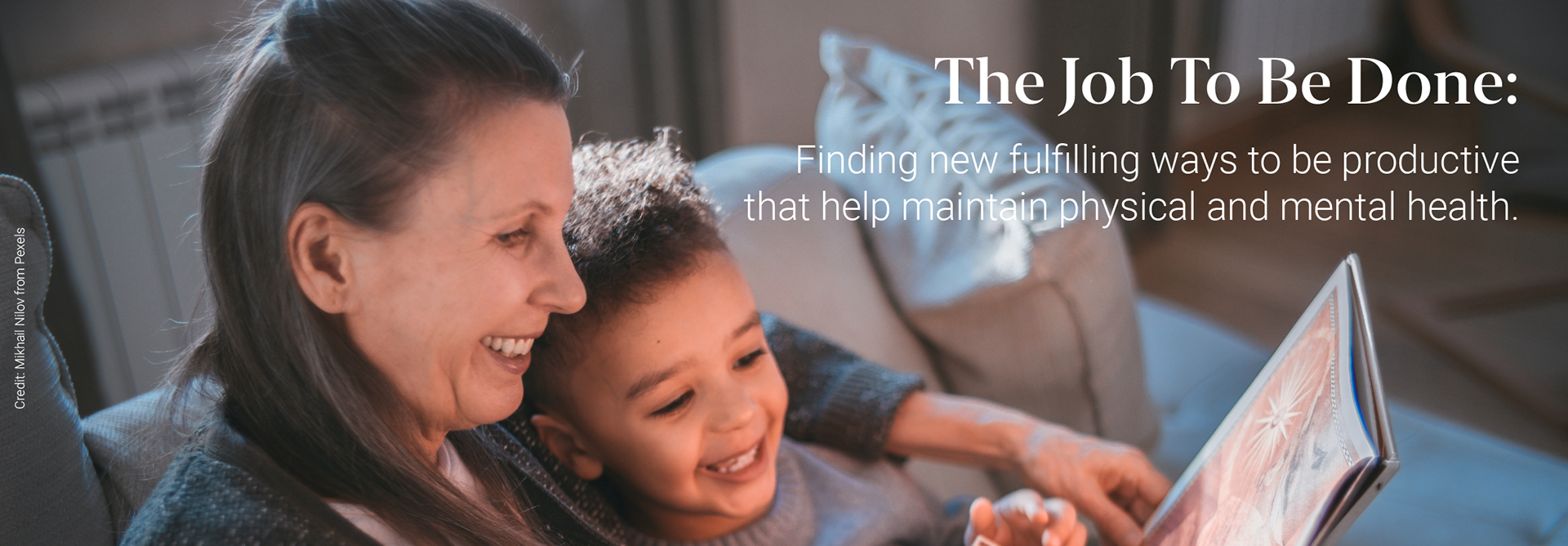
To build upon my problem, I referenced the theory of 'jobs-to-be-done. This highlighted the importance of transition.
Retirees are transitioning from spending much of their time working to having that time now free for recreation. When they retire, their priorities become focused on maintaining their quality of life, fear of physical or mental decline, and becoming a burden to the family.
Early Ideation
This was focused on identifying ways I could stimulate retirees to be more active. I was also focused on different ways to create a new vision of fitness that was centred around mobility rather than workout performance.
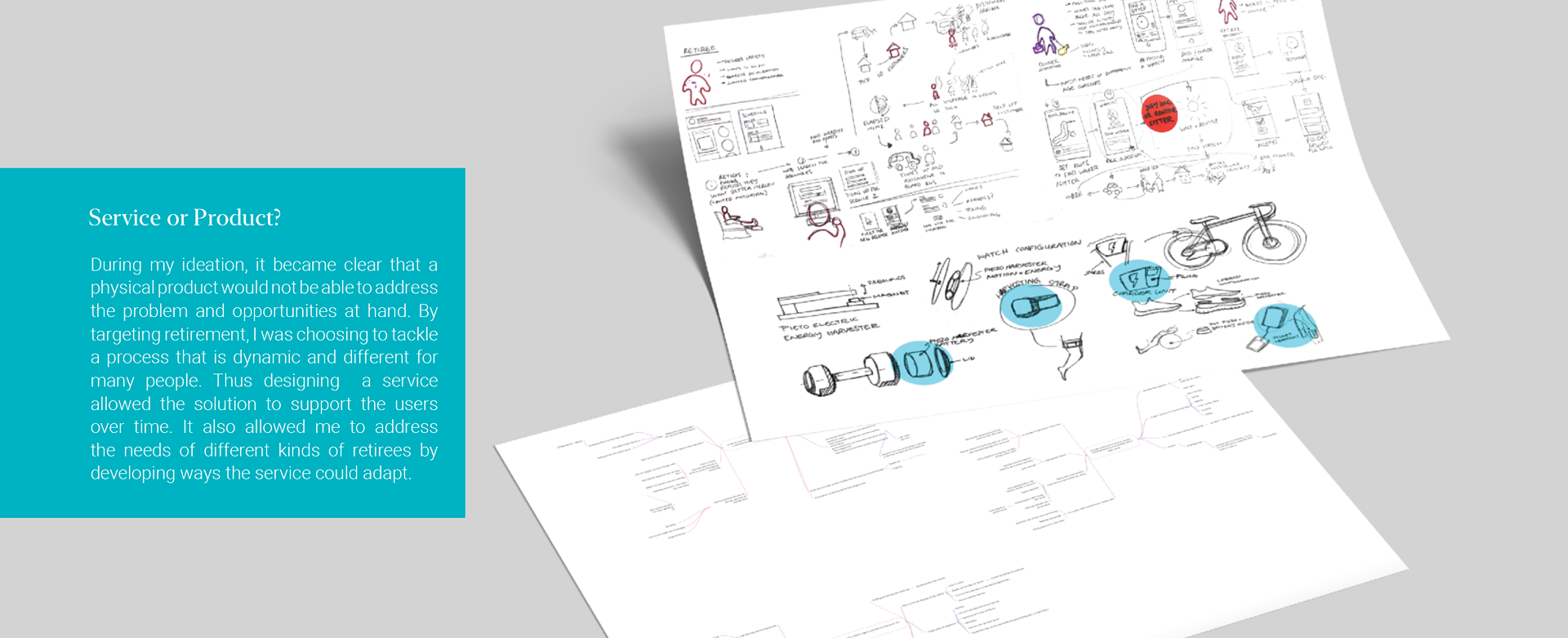
My focus shifted away from tracking performance and progress. Instead, I kept beginners in mind and thought of ways I could facilitate this process of self-discovery. I moved forward with a concept based on libraries and temporary ownership of equipment. The service would allow its users to try an activity out for a limited amount of time before moving on to try another one.
Designing the Service
I began by engaging upcoming and recent retirees in a survey asking them about services they use, how they use them, and what they like/dislike. I also held participatory design workshops based on the concept.
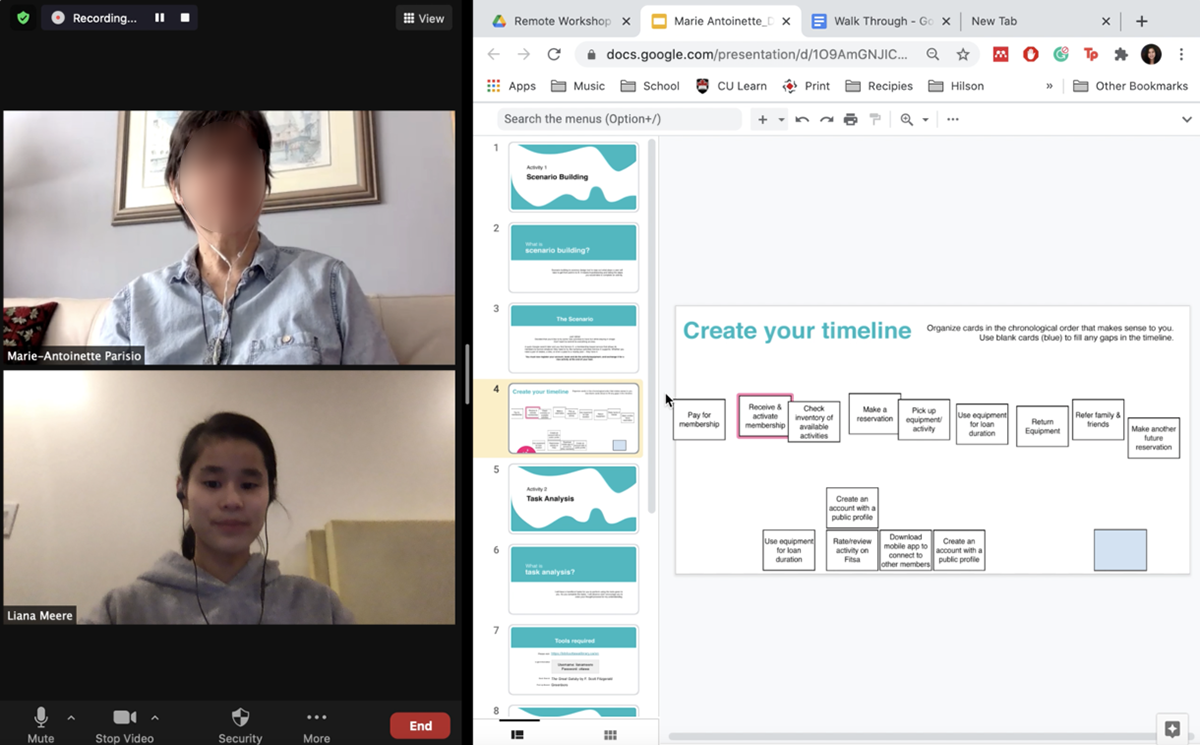
I then began mapping the service components to determine the basic needs and functions of the service.
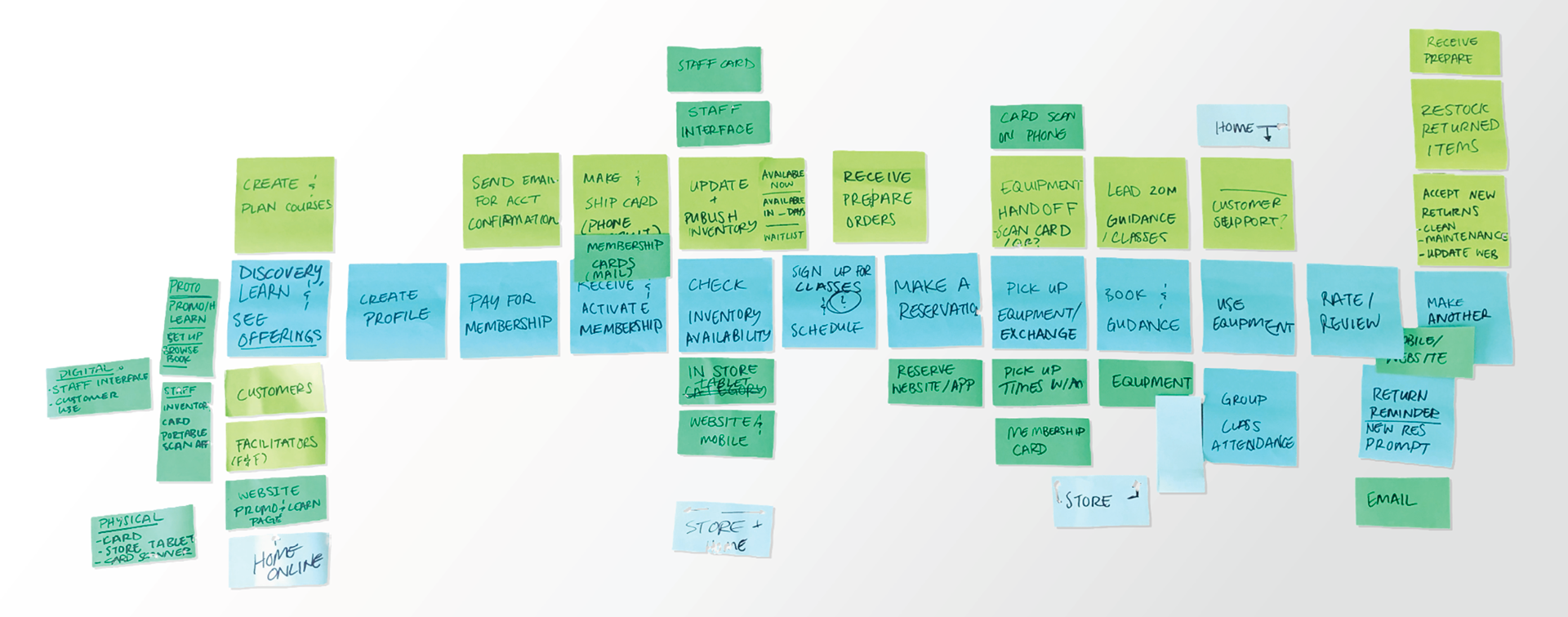
Concept Modelling
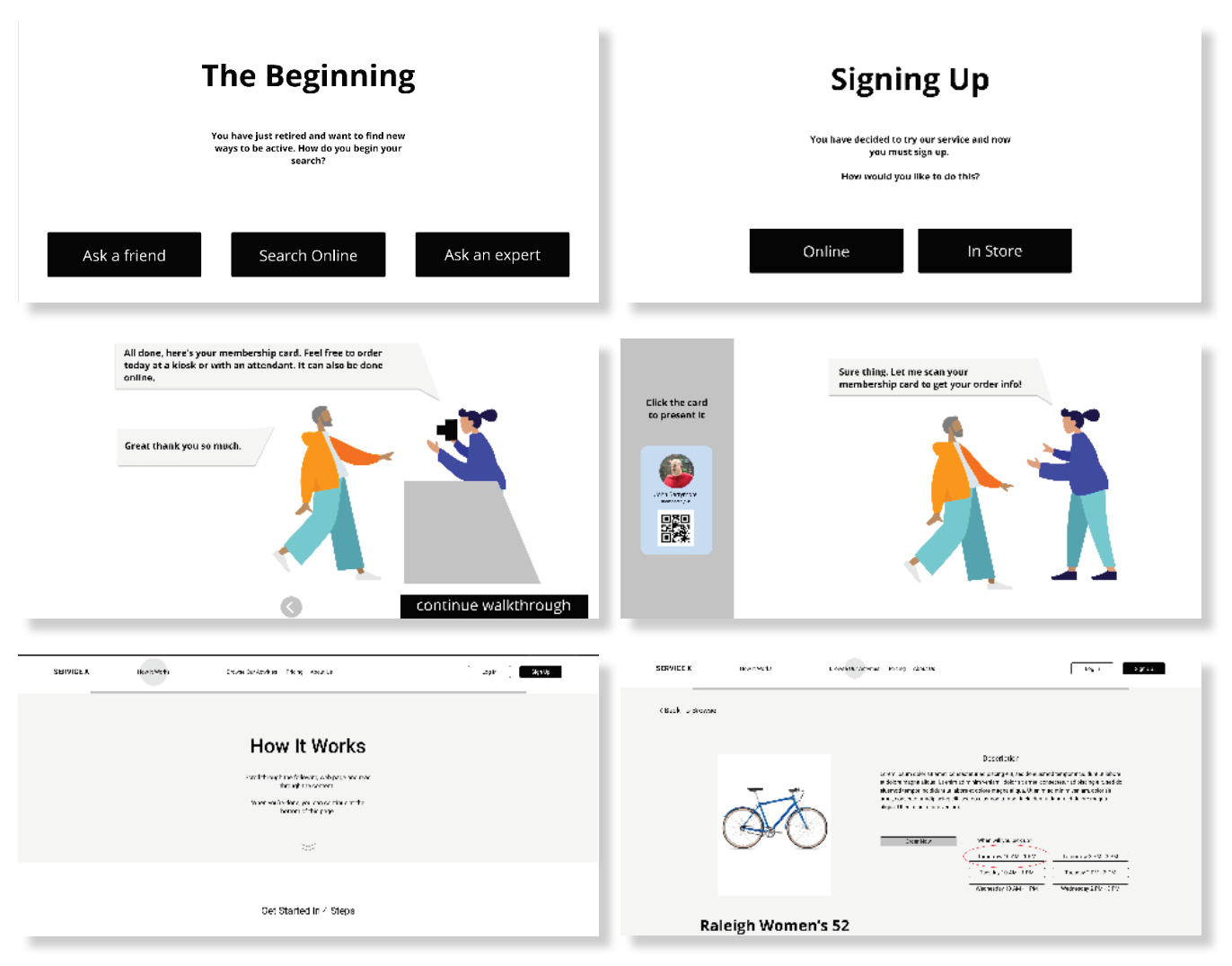
The service comprises of both in-person and online components. I did multiple prototypes of the online platforms and tested them with participants. To simulate the in-person interactions I created a journey walk-through where the participant could make decisions throughout their journey. They could click buttons to perform different actions (e.g. sign up online or in-person). Based on the option they clicked, they would be shown a different page afterward making every path unique.
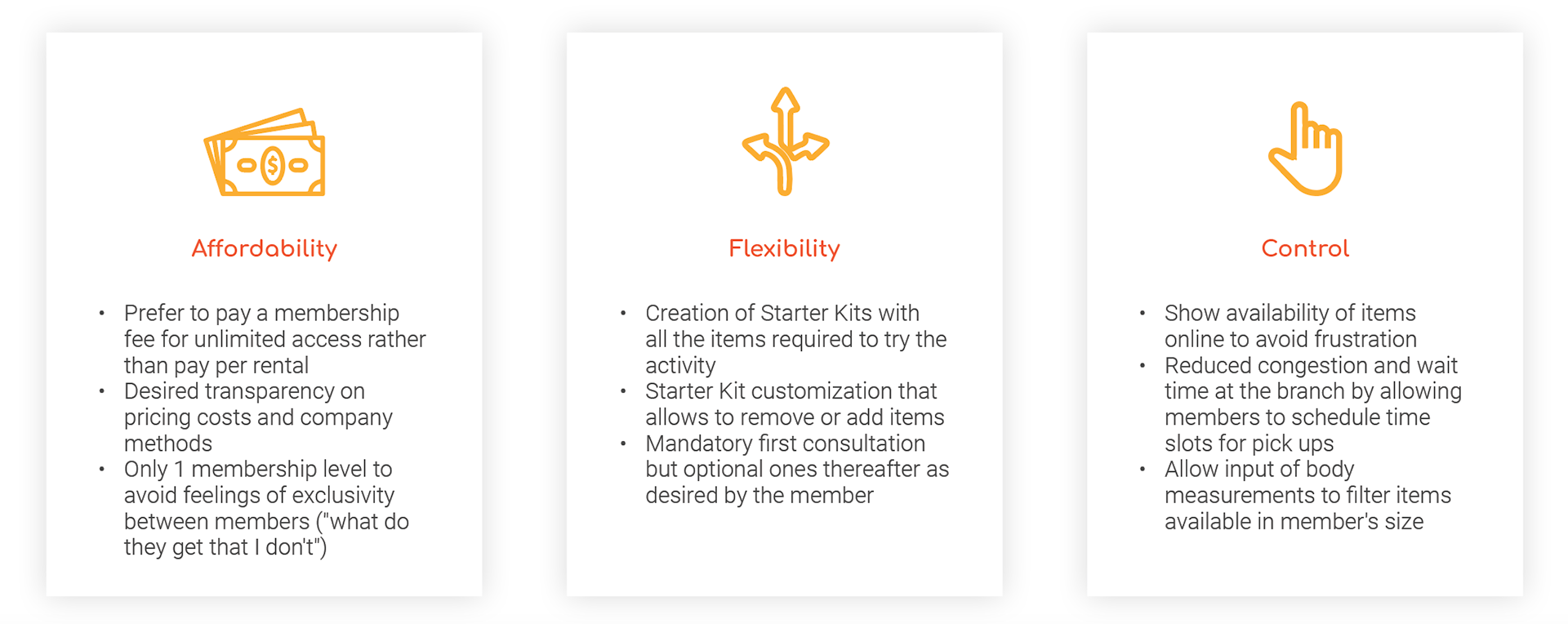
Key Findings
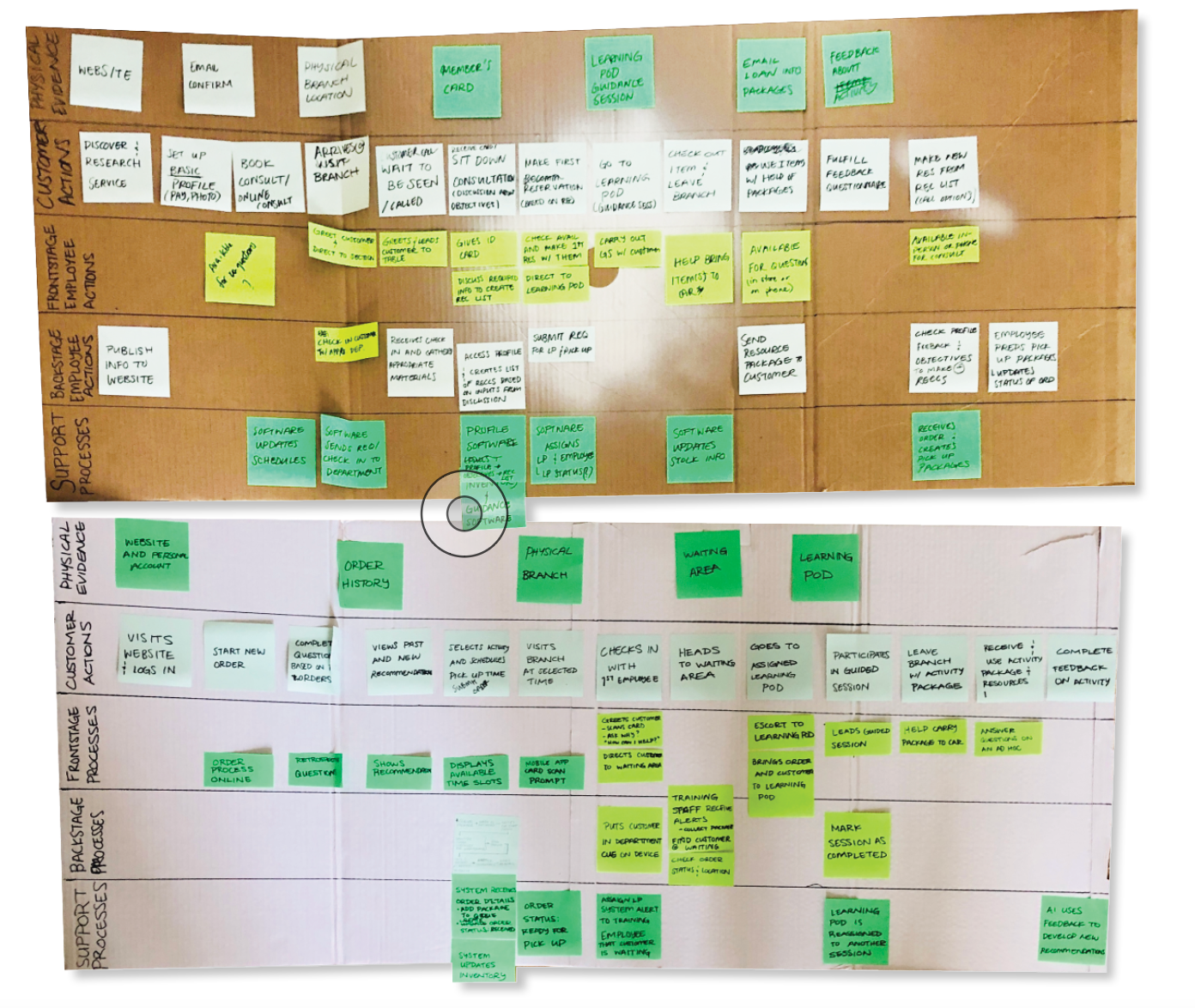
Initial Service Blueprints
During the concept refinement, I adapted my earlier service model into a preliminary service blueprint. The service blueprint allowed me to visualize all the actions, touch-points, and processes together.
I segmented the customer journey into 6 core use case scenarios.
1. On-Boarding (Discover & Sign Up)
2. Browse Inventory & Make a New Order
3. Book a New Consultation
4. Edit/Cancel an Existing Order
5. Edit/Cancel an Existing Consultation
6. Give Feedback on an Existing Order
StepOne
The Concept
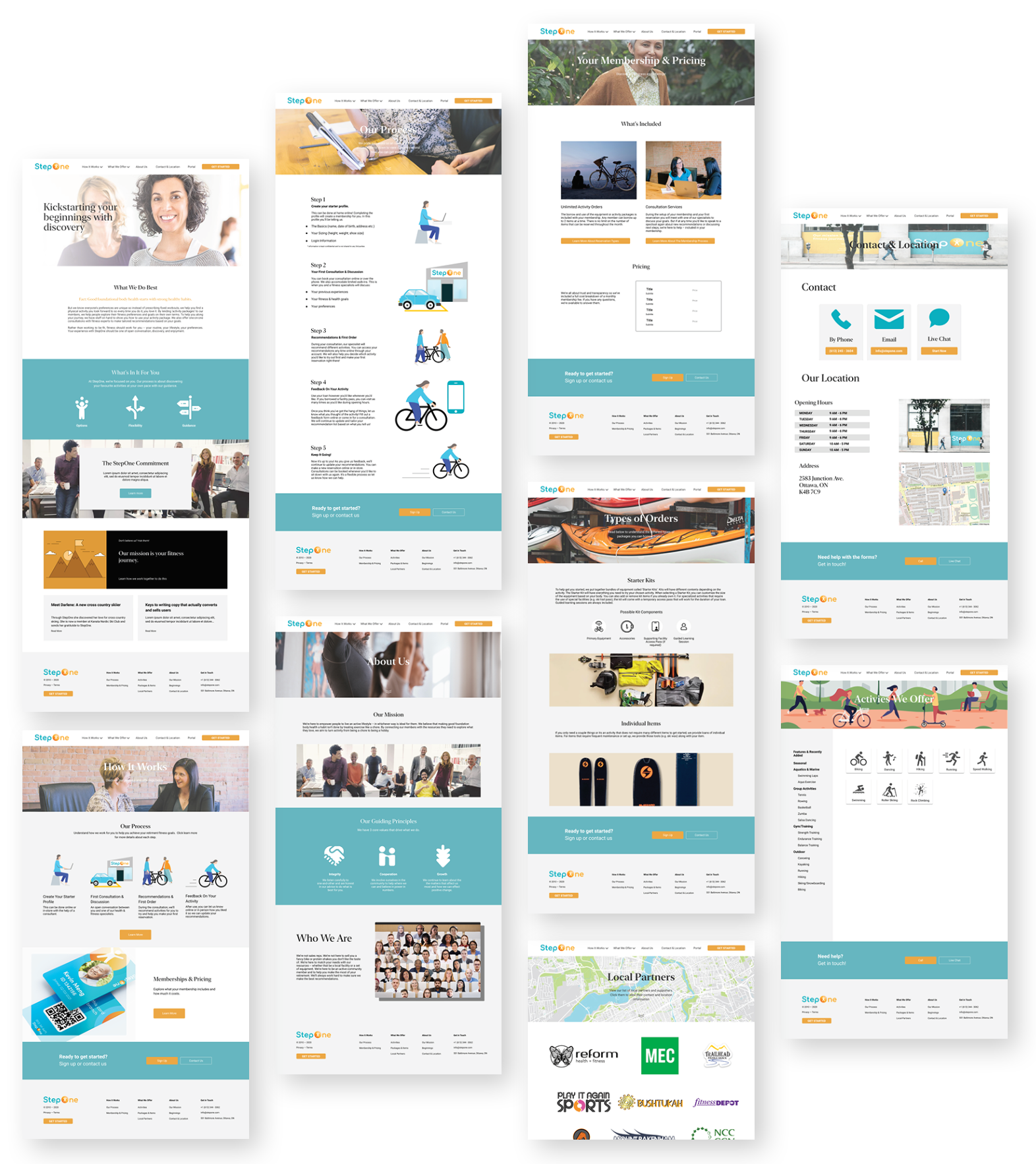
StepOne is a service that helps its members discover a physical activity that suits their preferences and lifestyle. StepOne believes that good foundational body health starts with good habits. By finding a physical activity they love makes it that much easier to stick with it.
By lending packages of equipment or facility passes for our clients to try popular activities like skating or biking, they can help people explore their fitness preferences and goals on their own terms. Once finished trying the activity, they return the equipment in exchange for a new activity. To help members along their journey, the membership includes consulting services with fitness experts and trained staff to show members how to use what they’re borrowing.
How It Works
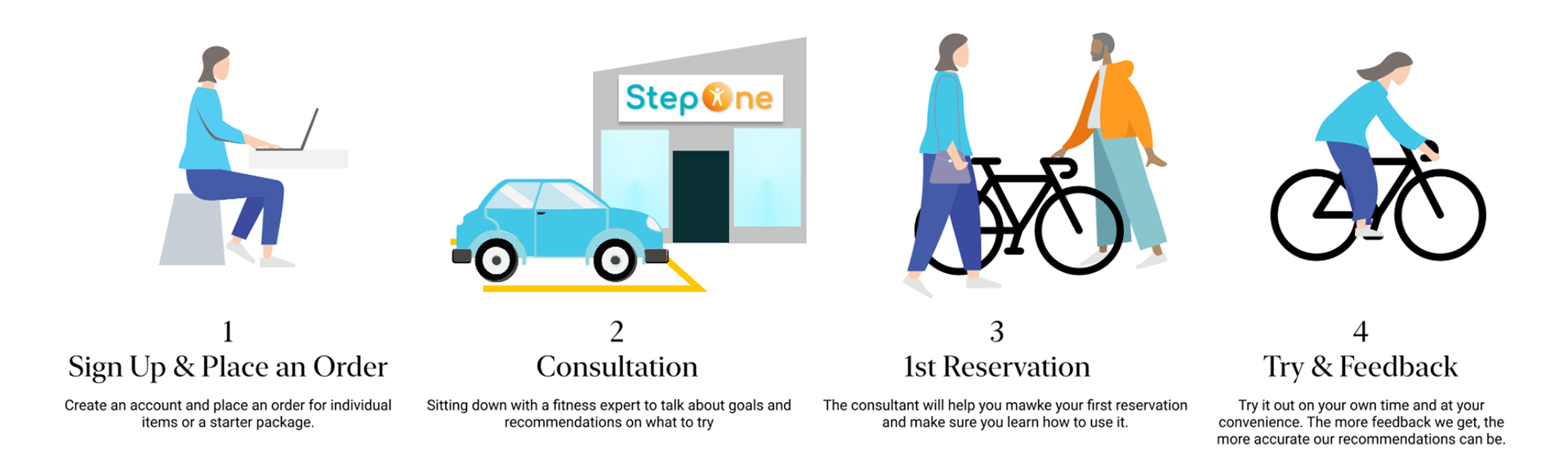
Once set up online, members must schedule a kick-off consultation meeting with a StepOne expert. It is the StepOne expert's job to ask the member about previous physical activity experience, what their future goals are, and create a list of recommended activities on the member's account. These recommendations can be viewed The member will have access to their recommendations any time they sign into their account online. Once tried, they are able to give feedback online about their experience to help StepOne update the recommendations.
Membership Cards
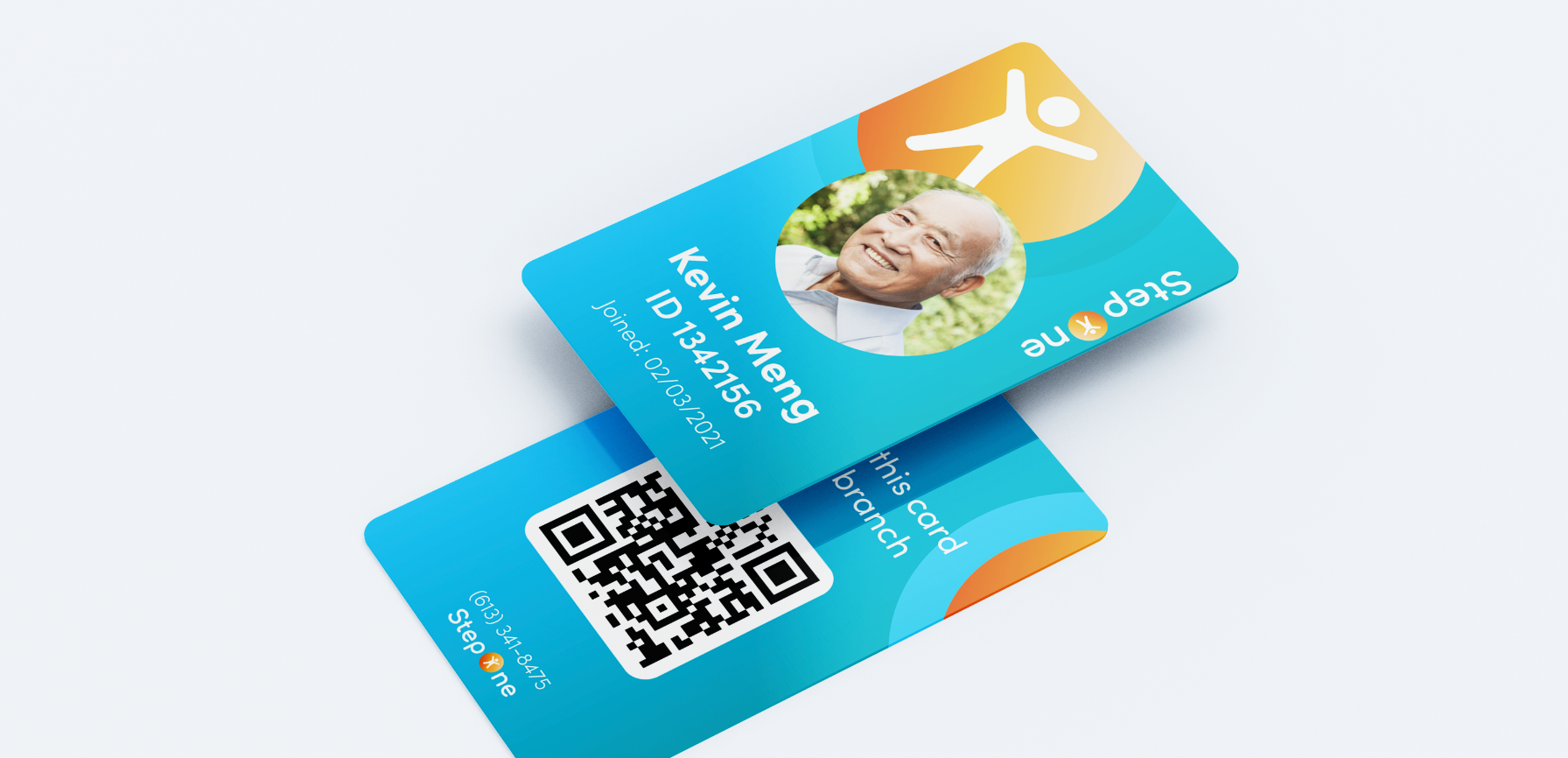
These cards are used to help retrieve a member's account and borrowing information upon the card's presentation.
Storage & Inventory Management
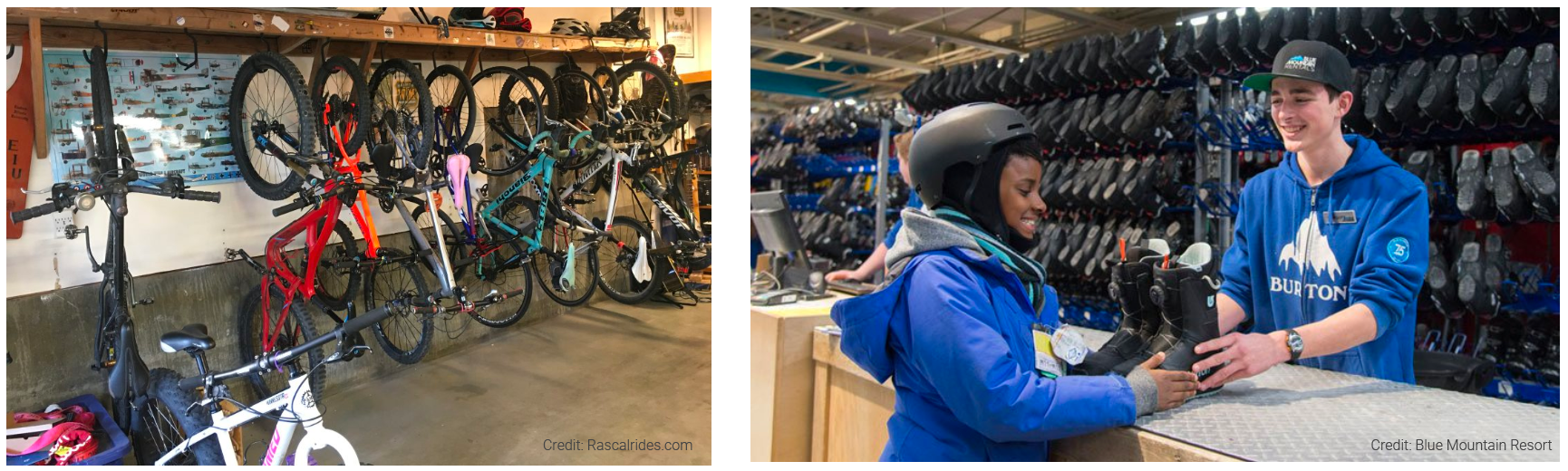
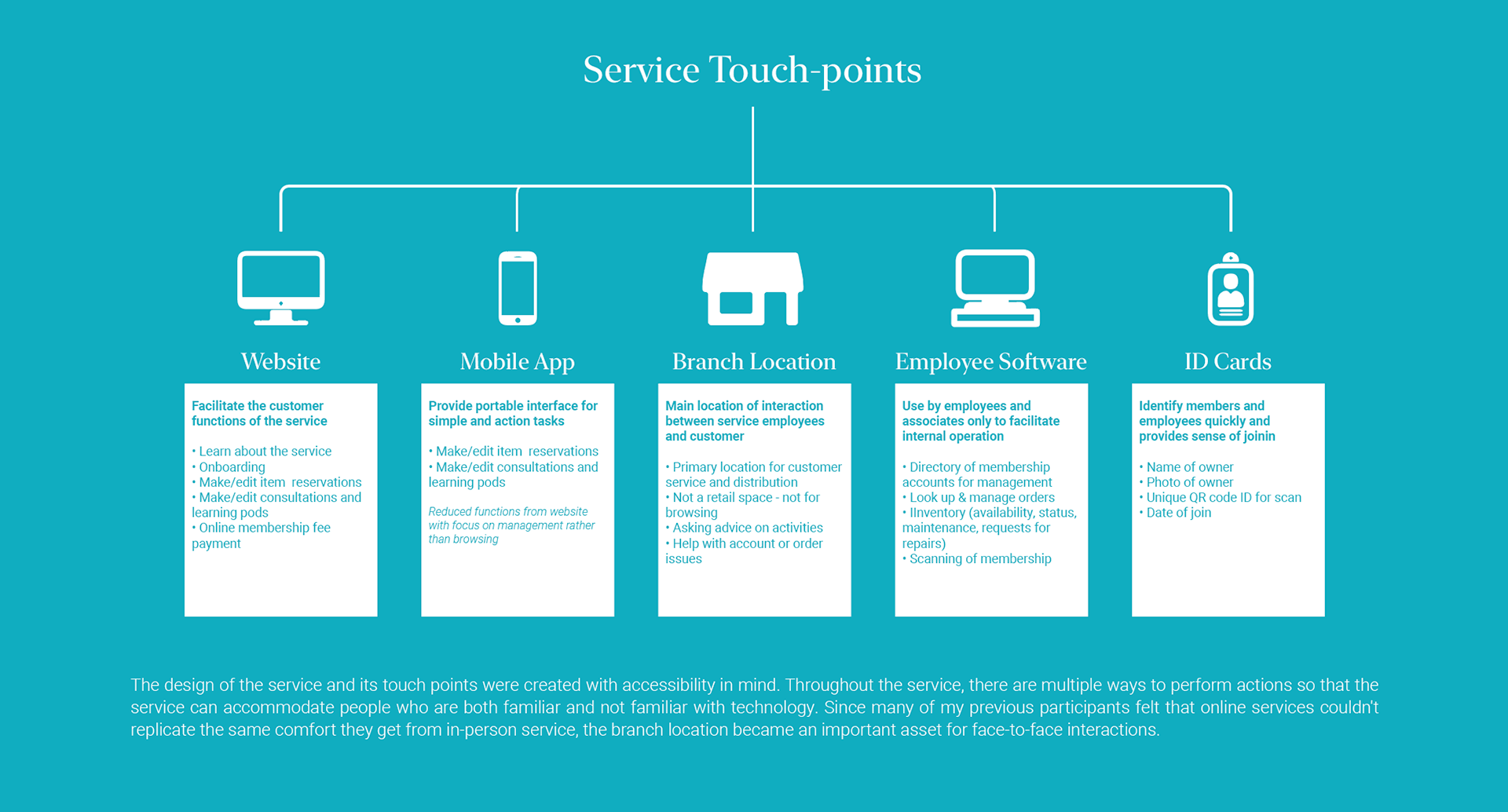
Local Branch Storage: With no browsing in the store itself, the service can reduce the "front stage" space required for customer interactions and dedicate more space to storing activity equipment. Only items that are small-medium sized and with a low risk of injury will be kept in the branch storage (e.g. bikes). Items kept in inventory can change depending on the popularity of activities.
Partnered Facility: For activities that require specialized equipment or specialized training (e.g. rock climbing), the Starter Kit will include a temporary membership that allows them to borrow equipment from a local facility that will provide the necessary training.
Creating the Brand
The brand development not only involved colours and typefaces but also expanded on the linguistic style and tone of writing any promotional material would use. The style selection was made based on research on brand archetypes, colour perception and accessibility. The brand is meant to create feelings of comfort, trust, and excitement.
Brand Drivers
Targeting new retirees who are on their own path of discovery, StepOne wants to act as a facilitator. Rather than make decisions for them or prescribe routines, the goal is to be a friendly advisor and make useful suggestions based on an open discussion about their goals.
The Logo
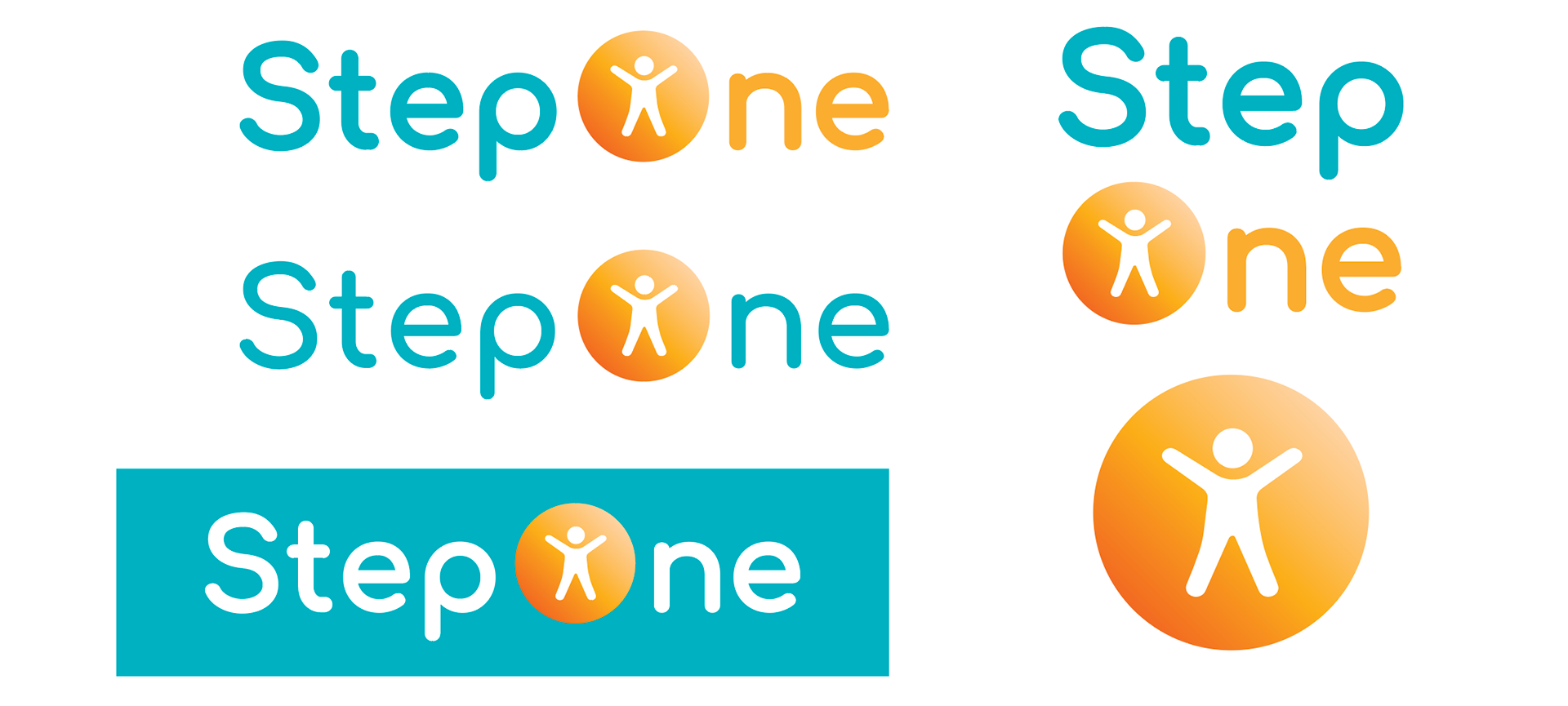
As a new service who must build the brand from scratch, a wordmark logo made the most sense. The brand recognition would immediately relate back to the name of the service without requiring and guesswork. If you see the logo, you know the name.

Brand Colours
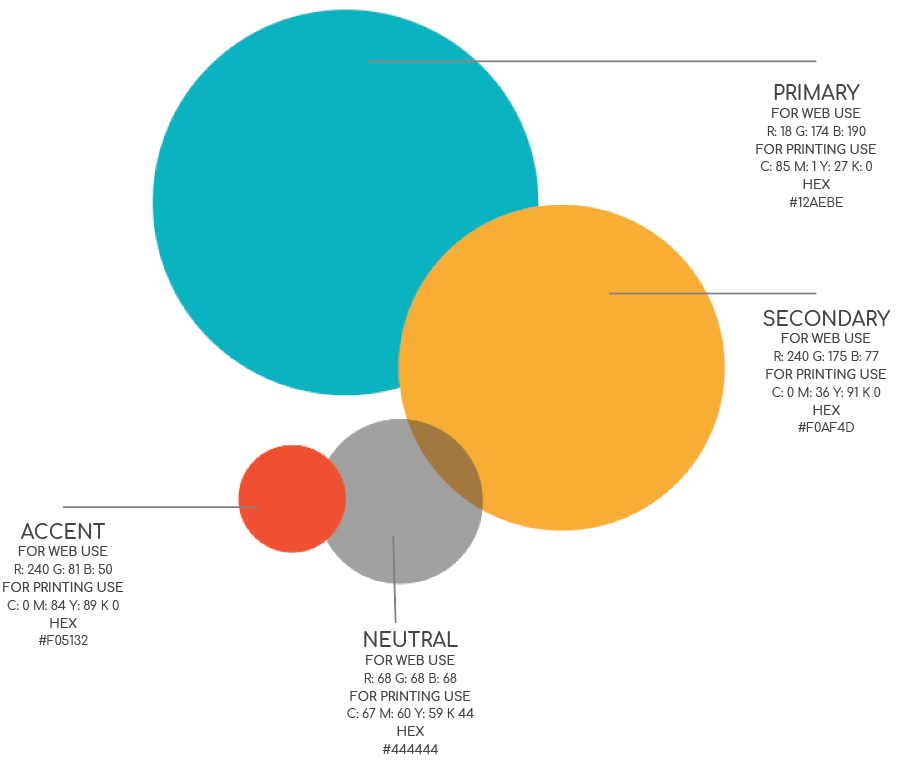
The colours chosen are intended to create an energetic and comforting feel. It was important to consider how these colours might act in print, digitally, and within the physical branch of StepOne.
The Website
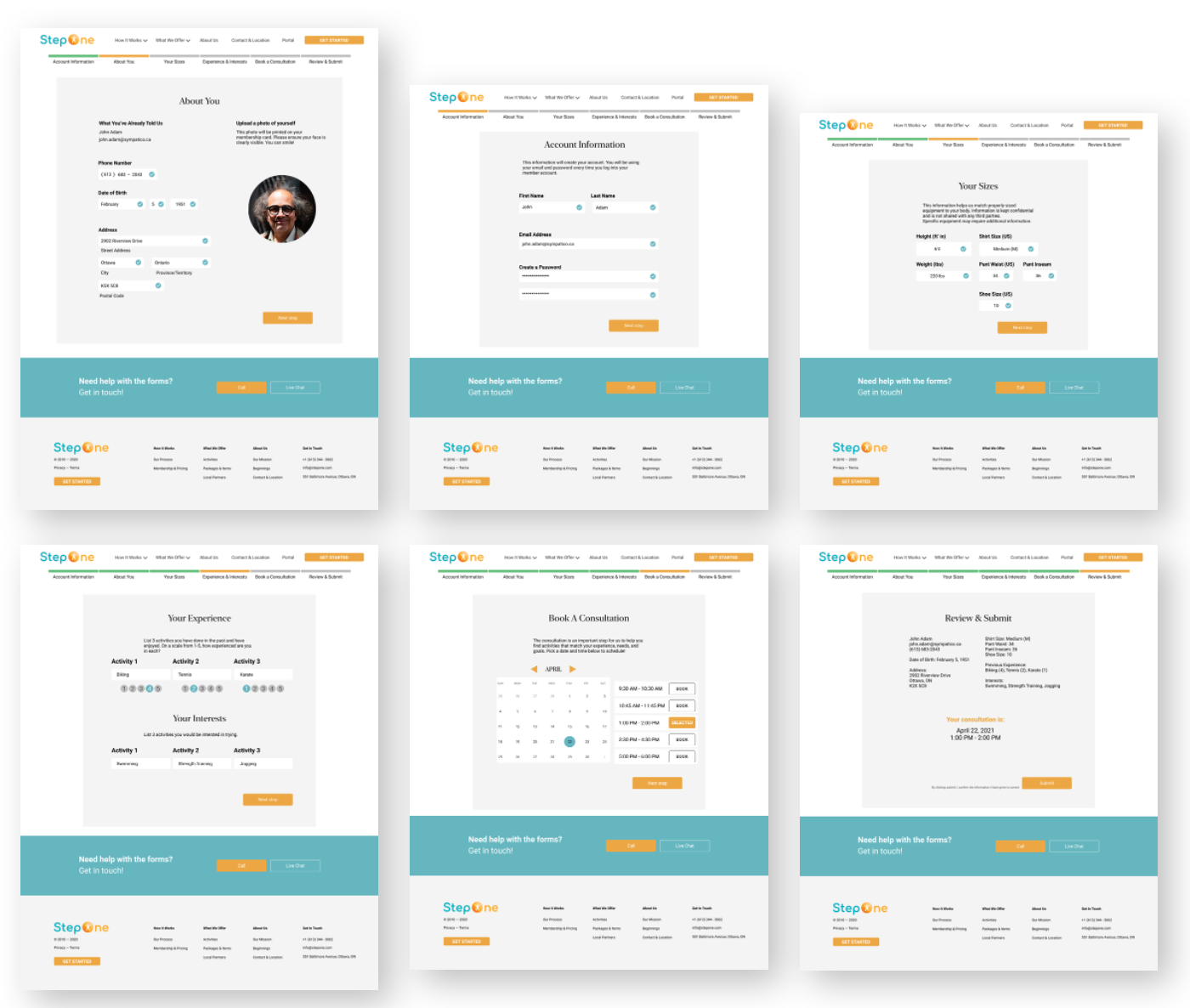
New Client Interface
Signing Up
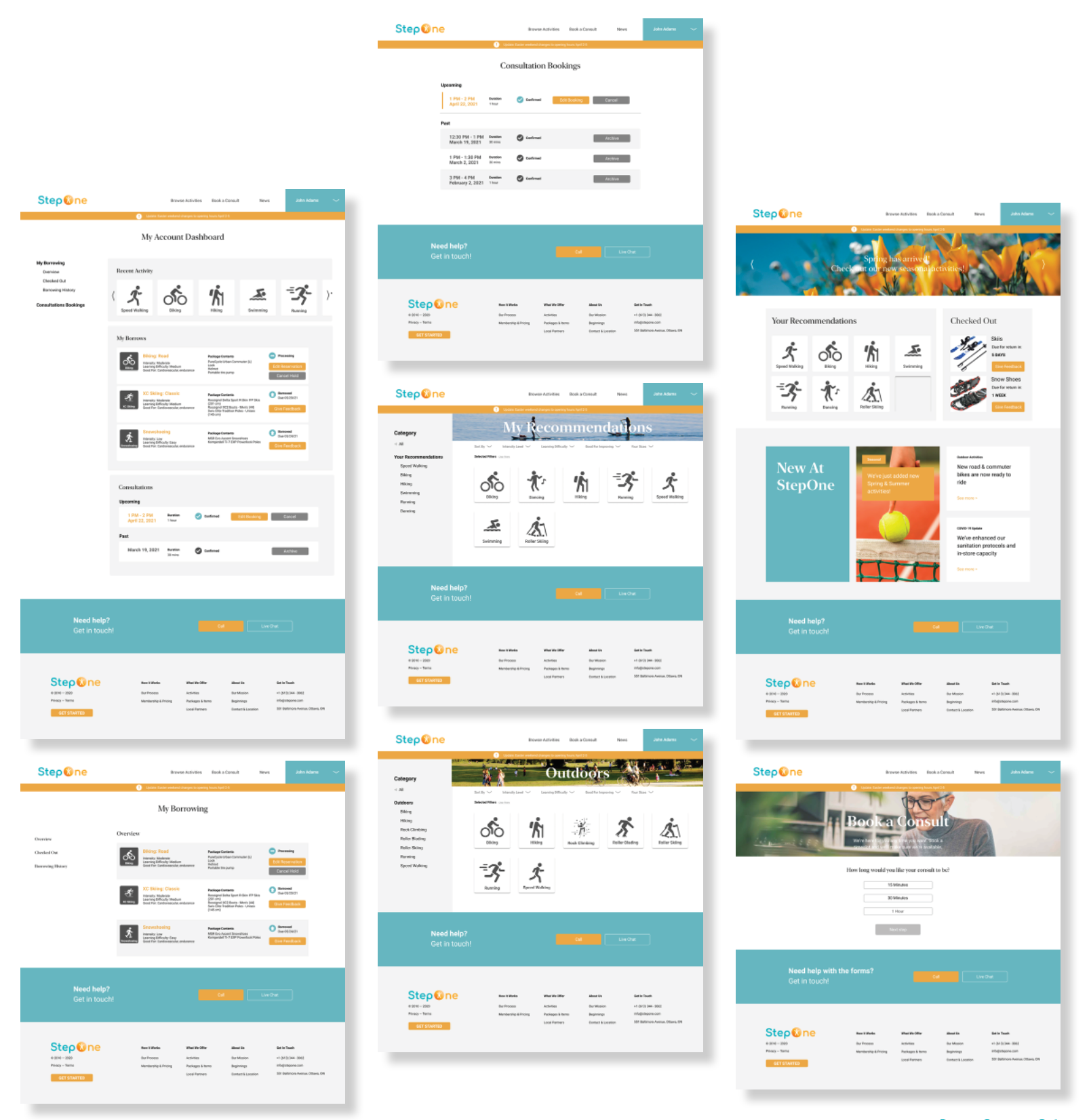
Member's Website
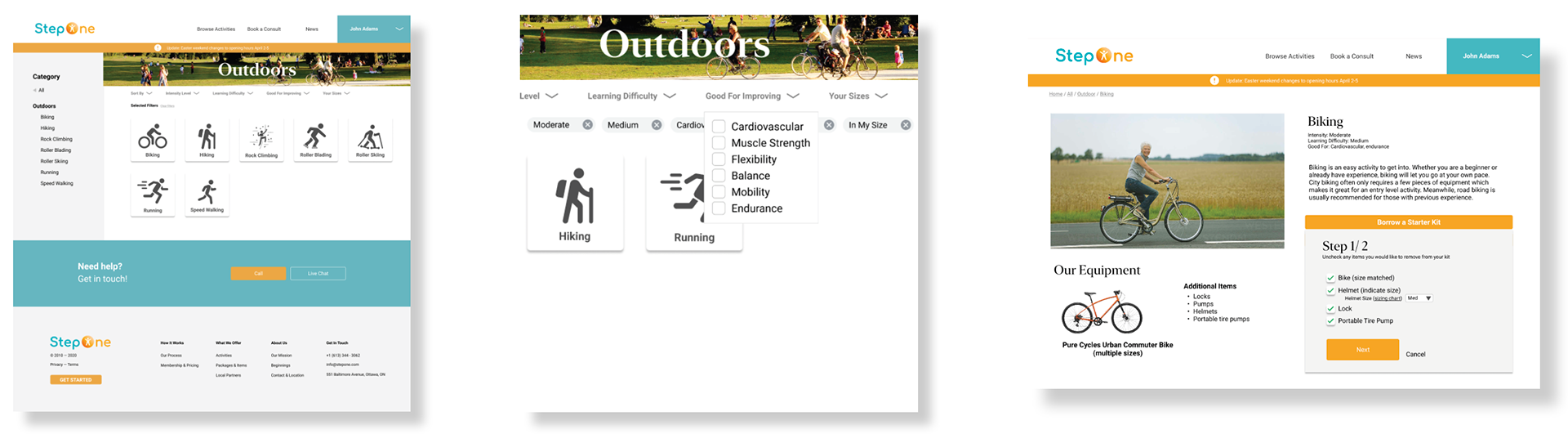
Making A New Order
Browsing Categories: Categories listed in the drop-down menu or on the side navigation bar
Filtering Activities: Filter (intensity level, difficulty to learning, and what the activity can help improve) the activities within any category, filter equipment in their size
Kits or Items: Both Starter Kits and individual items are available for order
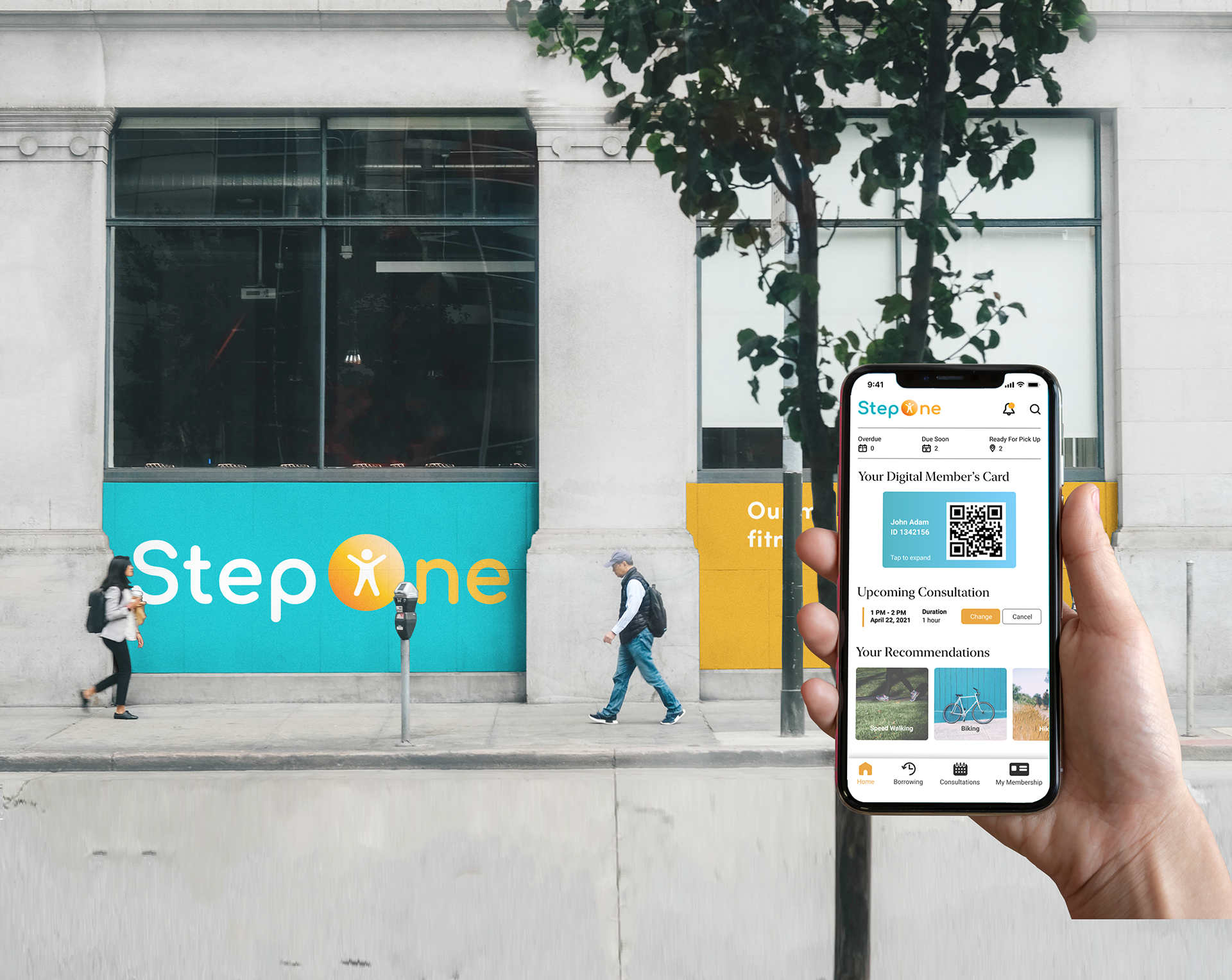
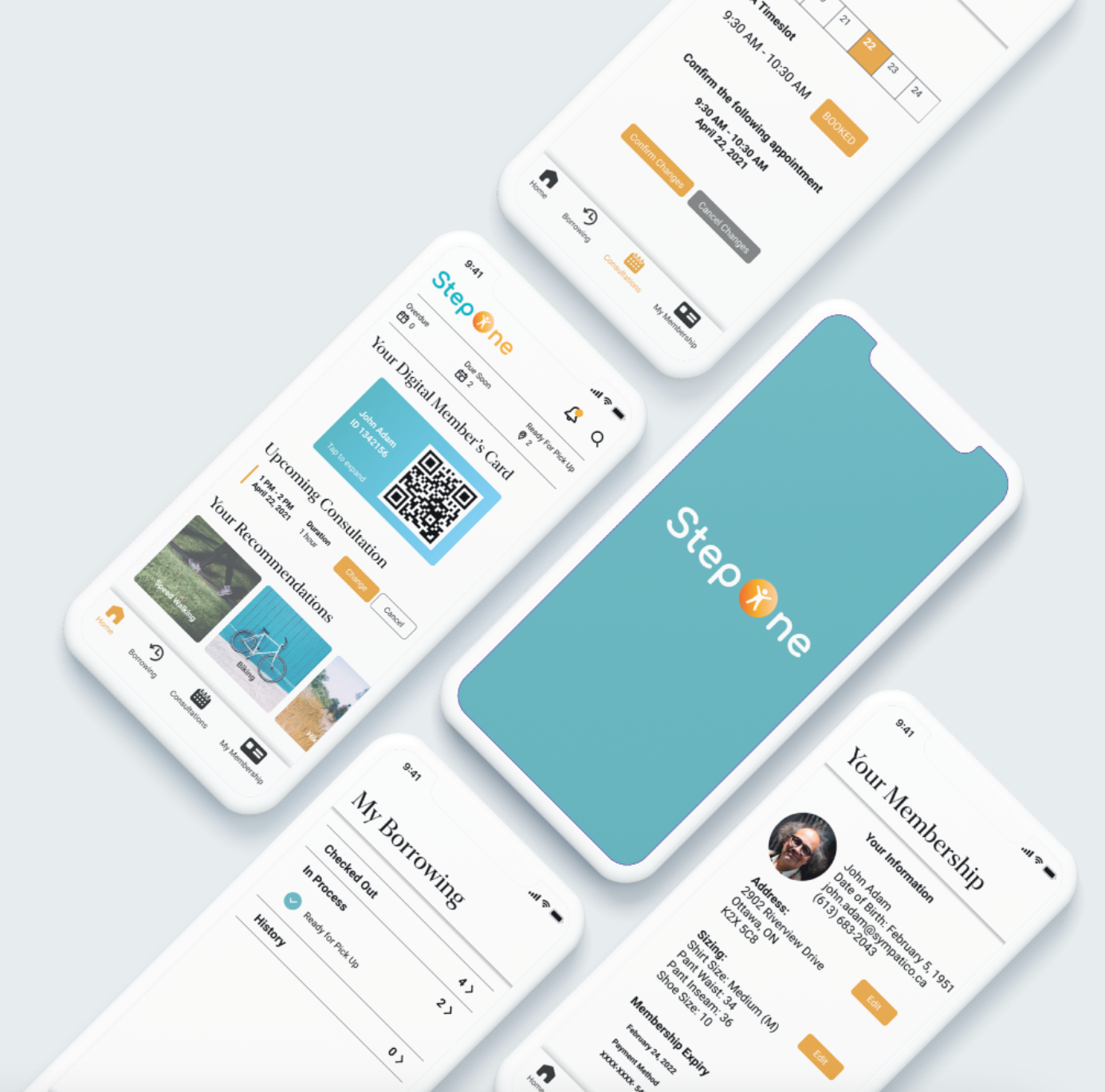
The Mobile App
The functions of the mobile app are less extensive. This is intentional because my research showed that people preferred to do complex tasks such as browsing on larger screens (e.g. a computer) instead of on their phone. However, the mobile app was still important to develop to give members the option of managing their orders and account on their phone.
The Service's System
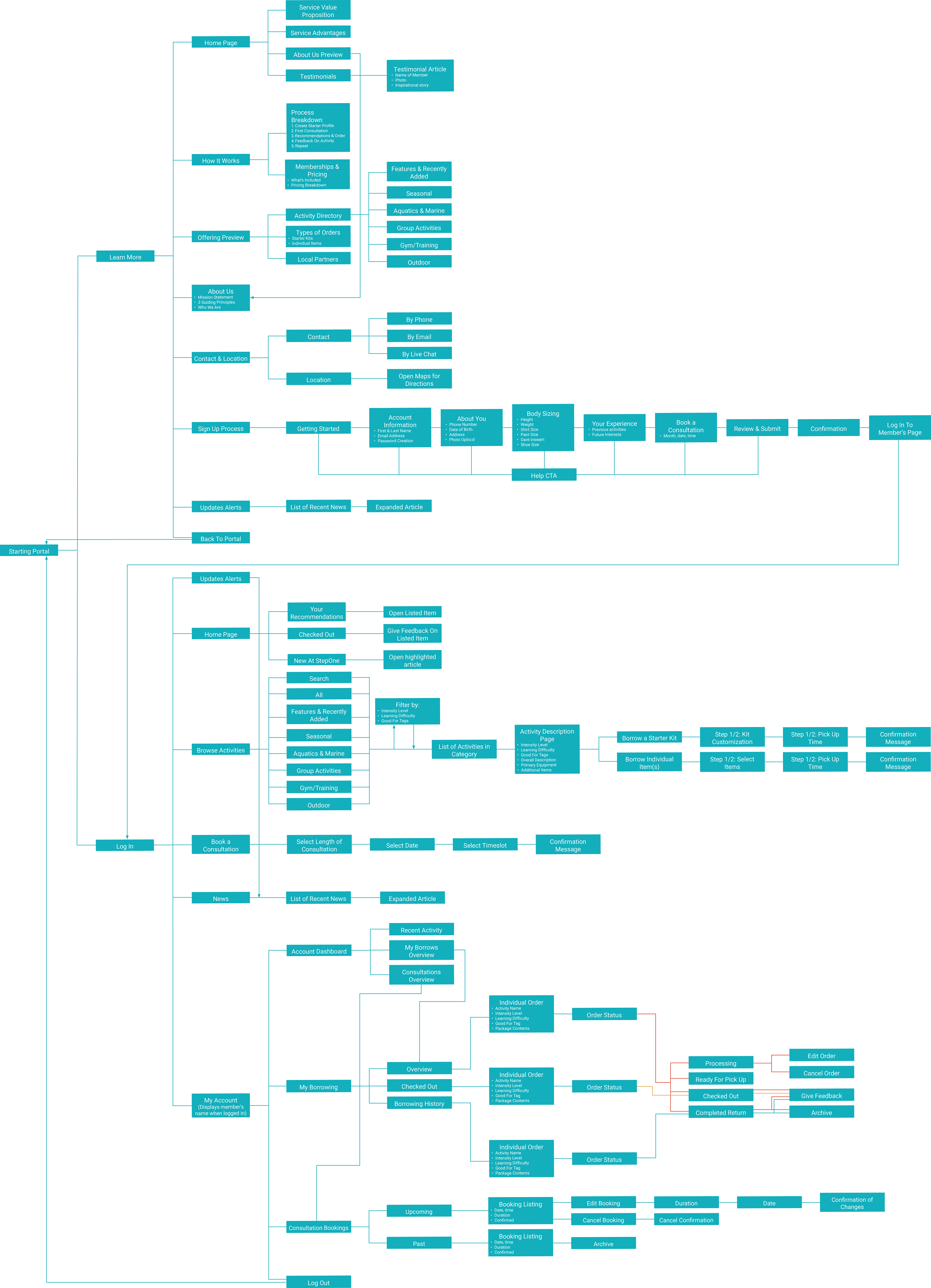
Information Architecture
For the website and mobile app, I used the same information architecture. However, for the mobile app, I omitted some functions that were not necessary. The information architecture was created using my findings from my participatory design workshops.
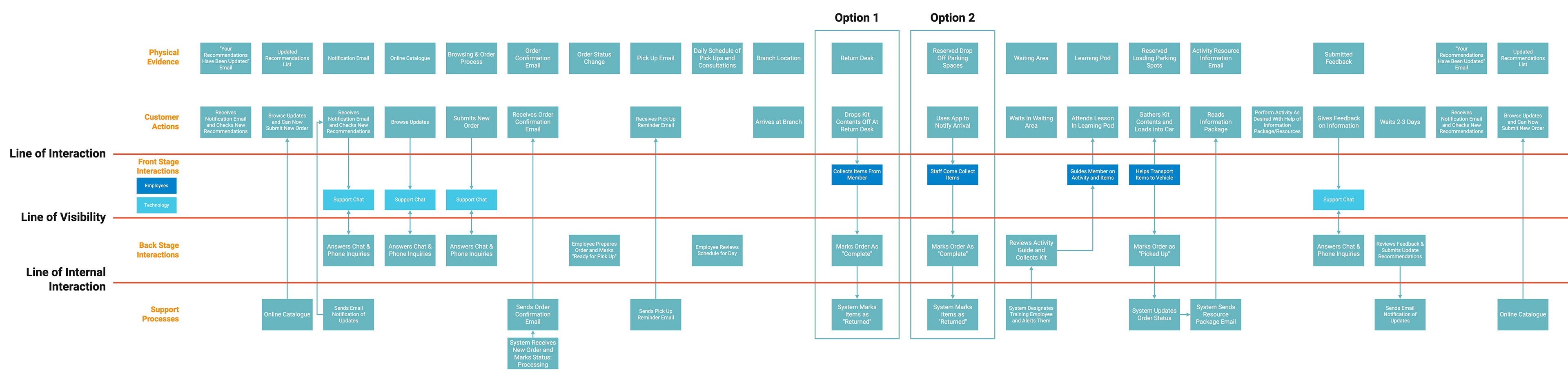
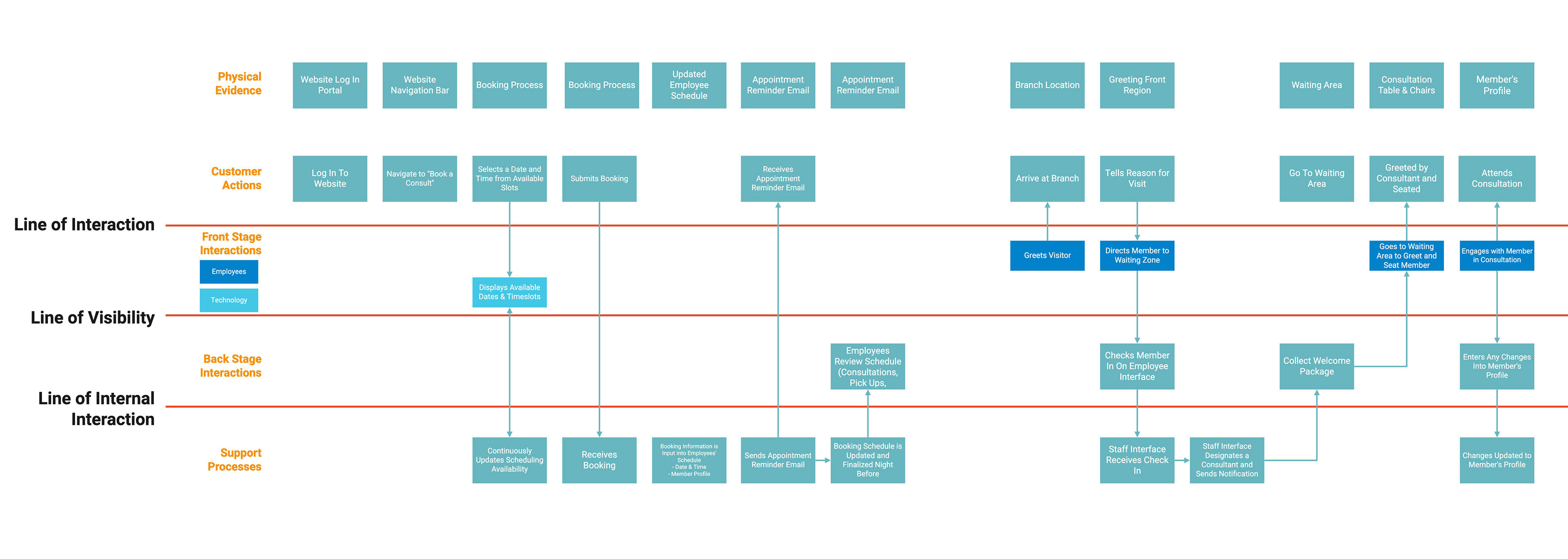
Service Blueprints
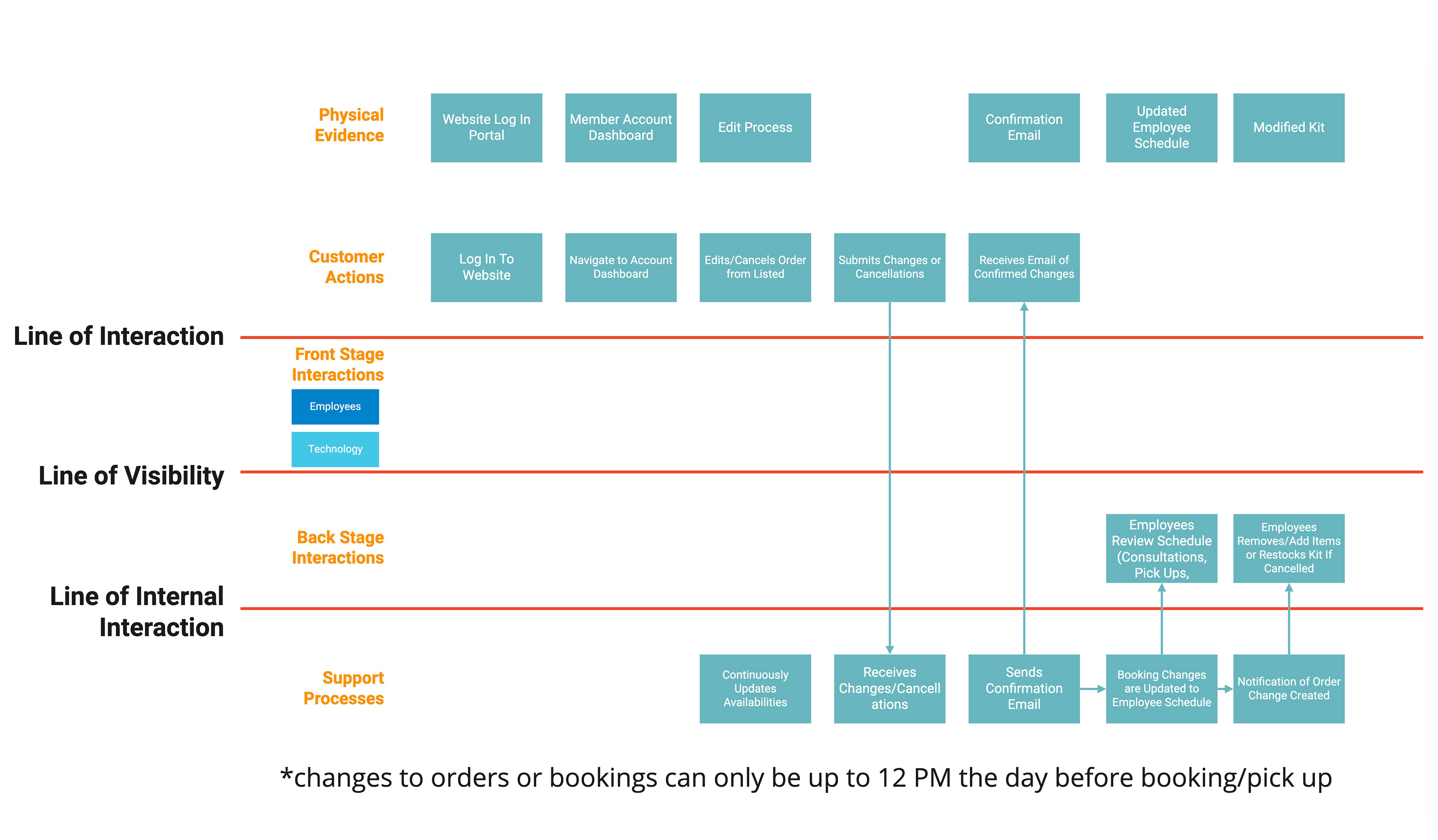
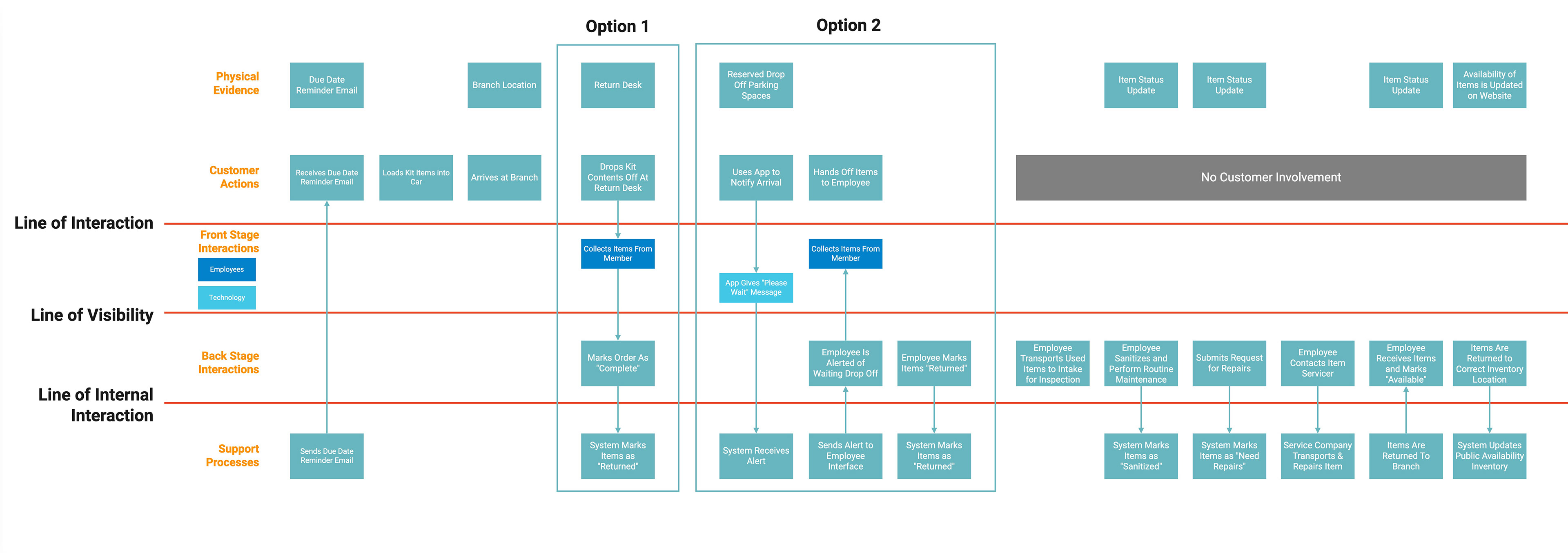
I updated the previous service blueprint by expanding upon them. Since one blueprint cannot capture the full service, I created 5 blueprint scopes.
1. On-Boarding (Sign Up & Consultation + 1st Order)

2. Browse Inventory & Make a New Order
3. Book a New Consultation
4. Edit/Cancel an Existing Order or Consultation
5. Return Orders & Inventory Management
Design Value
StepOne aims to create value to retirees by helping them stay physically and mentally active in ways that are adventurous, engaging, and flexible.